Photo lesson · 8 October 2026
My mother taught me that being underestimated can be an advantage.
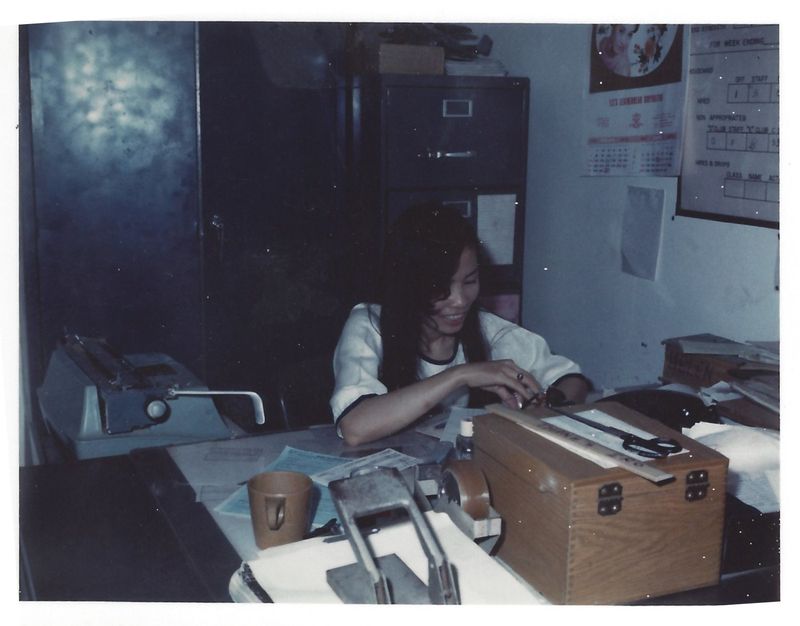
When my mother interviewed to be an interpreter for the U.S. Marines, she brought one thing: a Vietnamese-to-English dictionary from a market stall. One direction only. She held onto it, in her words, for dear life.
Her accent was heavy. When the Marines couldn't understand a word, she wrote it on her hand. When she ran out of room on her hand, she knelt down and wrote it on the ground. They read the word, the meaning landed, and everyone laughed together.
They hired her on the spot. Later they promoted her.
Here is what the paperwork could never capture. The men in that room saw a small Vietnamese woman with imperfect English and a used dictionary. What they actually got was someone who could move between two worlds under pressure, who made frightened villagers feel heard, and who solved the communication problem with whatever surface was available, including the floor.
Being underestimated hurt her exactly zero times in that job. It meant every result she delivered arrived as a surprise, and surprises get remembered.
I think about her whenever I am the person in the room others didn't expect much from. Low expectations are a quiet head start.
I want to be careful here, because being underestimated also costs. It costs in salary, in credit, in patience. My mother paid those costs and so have I. The advantage only appears when you stop spending energy correcting the room's first impression and let the work do the correcting. She never once argued that she was capable. She interpreted, and the argument ended.
 First published on LinkedIn, 8 October 2026